
The Ultimate Guide to 3D Printing Materials: Precisely Matching Materials to Printing Scenarios

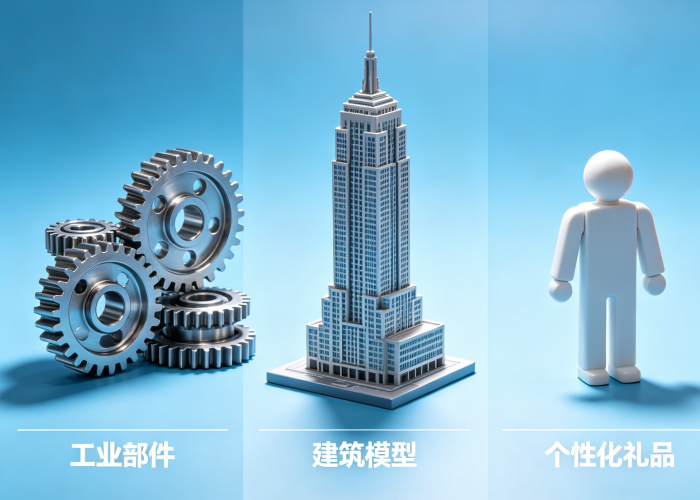
Many overseas distributors and bulk buyers often encounter printing defects such as model cracking, poor toughness, melting deformation and nozzle clogging during actual use. Most of these problems are not caused by 3D printer hardware failures, but mismatched printing filaments. As a professional 3D printing equipment and filament supplier with complete industrial chain layout, we sort out the characteristics, applicable scenarios and selection tips of 4 mainstream FDM 3D printing filaments, helping global customers avoid selection mistakes and improve printing yield effectively.
PLA filament is the most popular beginner-friendly material for global users. It features low printing temperature, no warping, no odor during printing and excellent molding effect. The printing temperature is only 190℃-210℃, which is compatible with all entry-level and educational 3D printers. It is the best choice for school STEM teaching, art model printing, decorative ornaments and daily prototype testing. However, PLA has obvious shortcomings: poor high temperature resistance and low toughness. It is not suitable for functional parts that need to bear pressure or work in high-temperature environments, and cannot be used for outdoor products exposed to sunlight for a long time.
ABS filament is a classic engineering-grade consumable with high toughness, strong impact resistance and good high temperature resistance. Its finished parts are not easy to break, so it is widely used for manufacturing functional mechanical parts, automotive accessories and durable daily parts. But ABS requires a closed printing chamber and higher printing temperature at 230℃-250℃, and it will produce slight odor during printing, which is not recommended for open household printers and classroom printing environments without ventilation systems.
PETG filament is currently the most cost-effective universal consumable for commercial and household use, combining the advantages of PLA and ABS. It has no odor during printing, low warping rate like PLA, and owns high toughness and heat resistance close to ABS. It supports open printing without a closed hood, and the finished model has smooth surface, good waterproof and anti-ultraviolet performance. It fits most scenarios including commercial customized products, outdoor ornaments, mechanical functional parts, and is the top pick for most bulk dealer orders.
Carbon fiber composite filament is upgraded industrial consumable, added with carbon fiber powder to enhance overall hardness and wear resistance. It is mainly used for high-precision industrial functional parts that require high hardness and compression resistance. We support one-stop procurement of printers and matched filaments, provide stable bulk supply, strict batch quality inspection and customized packaging service for global buyers. Reasonable matching of printer and filament can cut your after-sales failure rate by over 70% and bring more stable profit for your 3D printing business.